
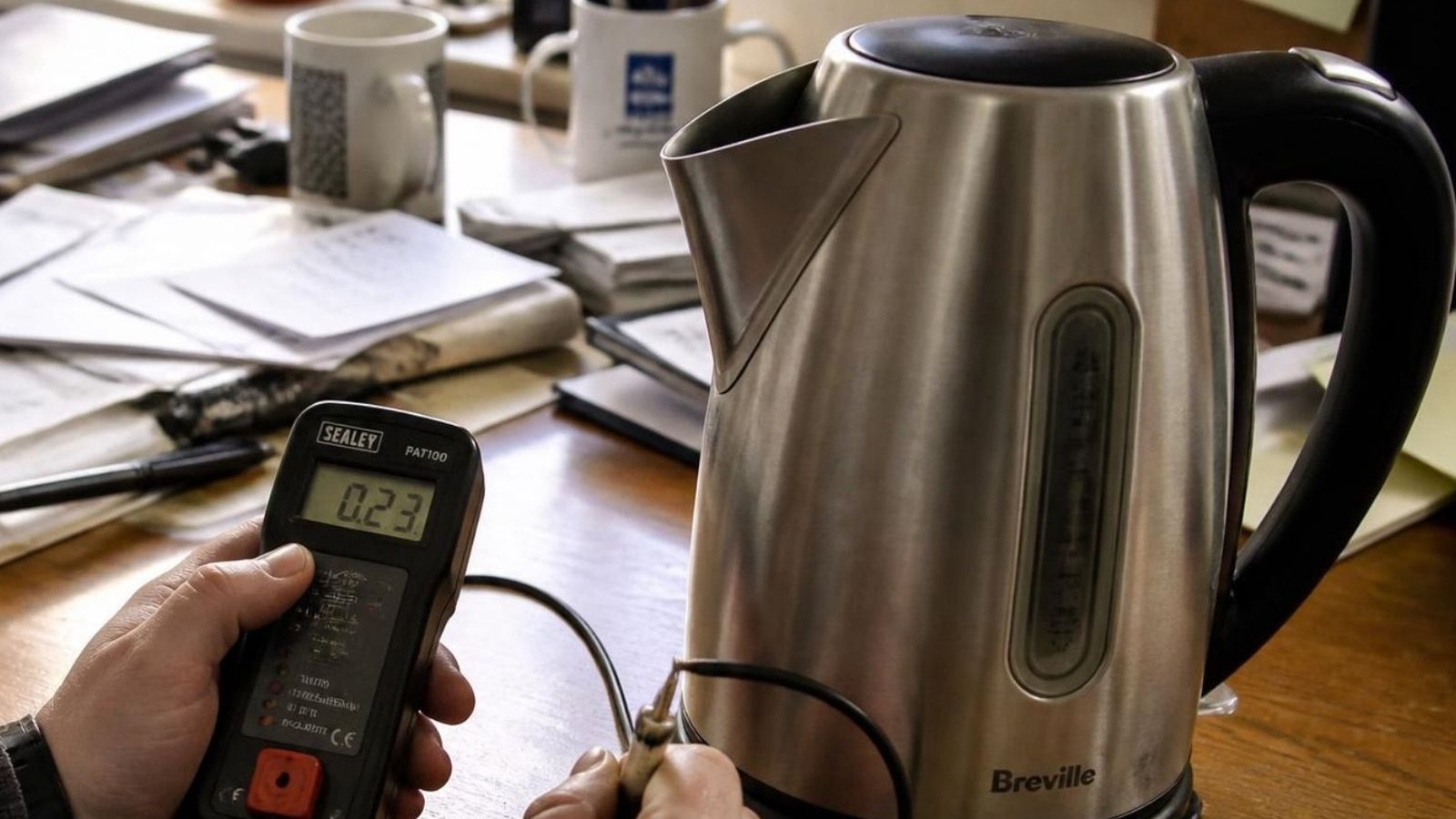
PAT Testing in Yorkshire, Lincolnshire and Nottinghamshire
I test the appliances that plug in — kettles, computers, power tools, fridges, extension leads — for offices, shops, pubs, rentals, schools and care homes, at any hour of the day or night.
From £80, including the first 50 appliances. After that it is £0.80 an item, dropping to £0.70 over 500 and £0.60 over 1,000. Tell me roughly how many items you have and you get the figure on the call. See the full price list.
- City & Guilds 2377 qualified
- 24/7 — evenings, nights and weekends
- Enhanced DBS checked
What customers say
I run RSTUK from Allerton Bywater, a couple of miles from Castleford. The M62 is at the end of the road and the A1 is a few minutes east, which is why a patch this wide is practical rather than a boast. Leeds and Wakefield are a short run. Sheffield, Doncaster, Hull, Lincoln and Nottingham are all a straight road.
The work is portable appliance testing and nothing beyond it. I test things that plug into a socket. I hold City & Guilds 2377, In-Service Inspection and Testing of Electrical Equipment, which is the qualification written for exactly this job, and I test with calibrated Seaward equipment.
Most people looking for local PAT testing want three answers before they book: what it costs, how long it will take, and when the paperwork lands. Those answers are on this page. If yours is not, the phone is on at any hour — including the ones nobody else answers.
What I test
One engineer, every kind of site
Offices and warehouses, rentals and HMOs, holiday cottages, pubs and kitchens, schools and care homes. Same job, different room.
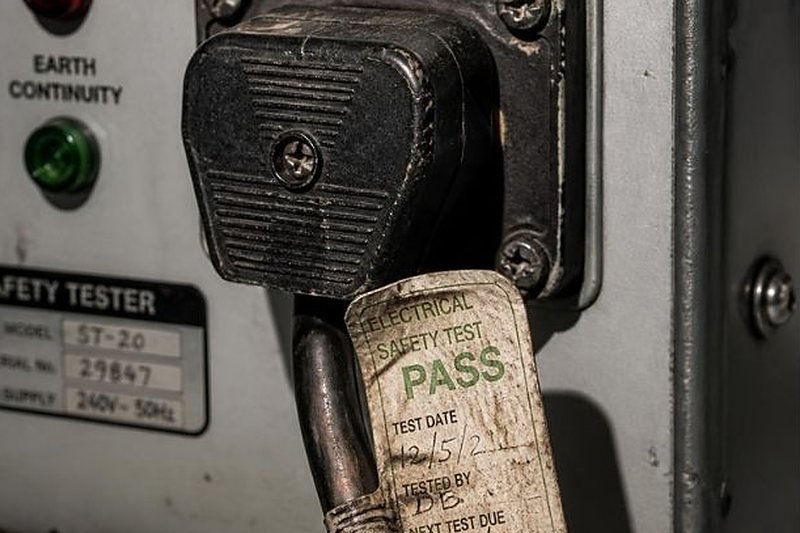 PAT Testing
Visual inspection, meter tests, pass or fail label on every item, report in your inbox.
Read more →
PAT Testing
Visual inspection, meter tests, pass or fail label on every item, report in your inbox.
Read more →
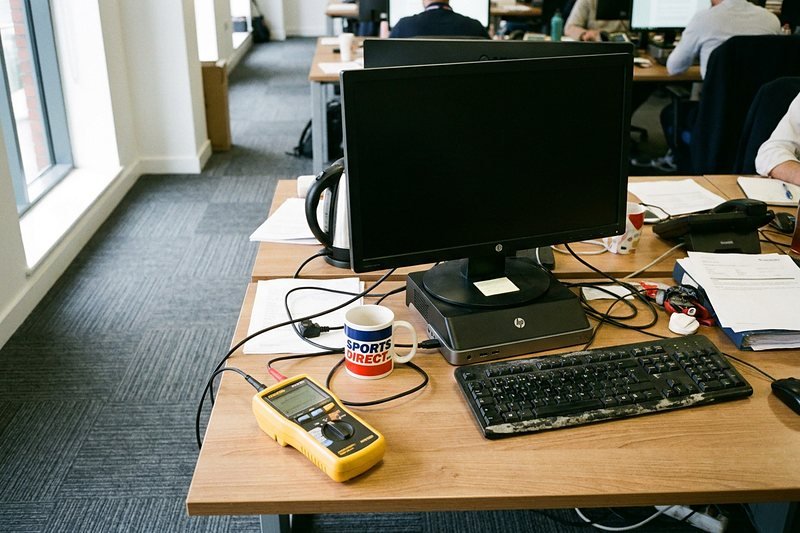 Commercial & office
Offices, IT kit, warehouses, factories and workshops, tested around your working day.
Read more →
Commercial & office
Offices, IT kit, warehouses, factories and workshops, tested around your working day.
Read more →
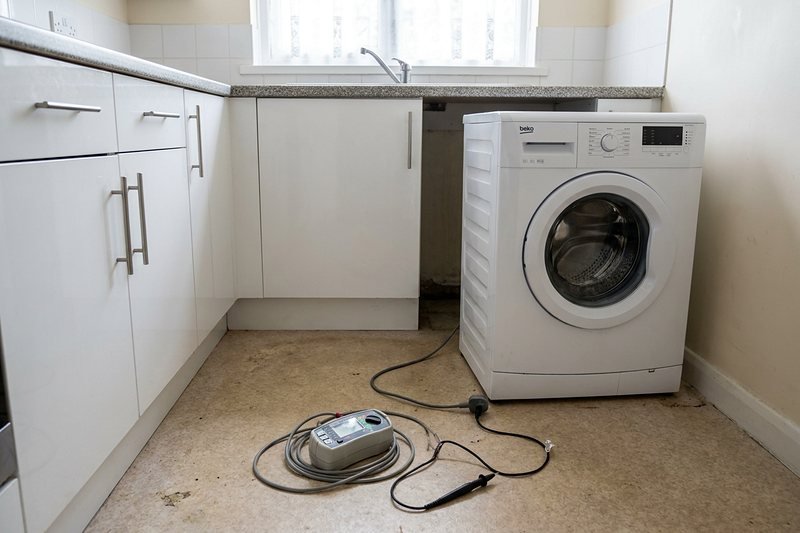 Landlords & HMOs
Single lets, HMOs and agency portfolios, with the paperwork agents actually ask for.
Read more →
Landlords & HMOs
Single lets, HMOs and agency portfolios, with the paperwork agents actually ask for.
Read more →
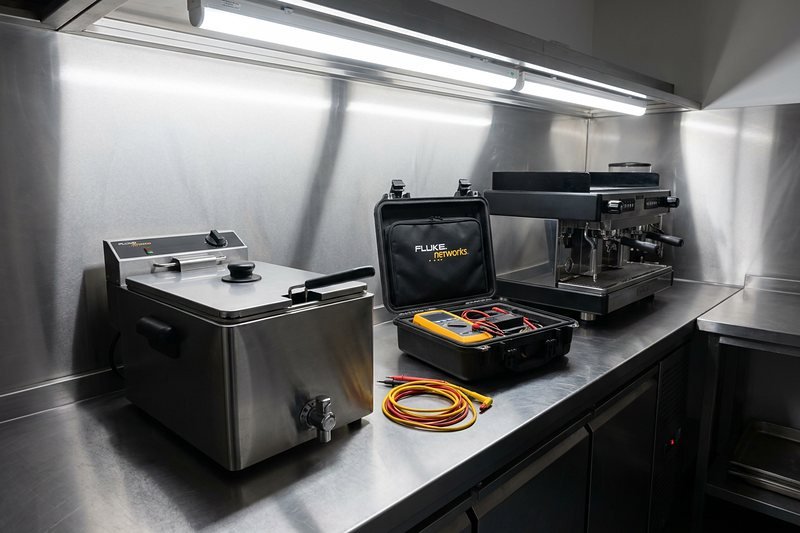 Shops, pubs & kitchens
Tested before opening or after last orders, so trading never stops for it.
Read more →
Shops, pubs & kitchens
Tested before opening or after last orders, so trading never stops for it.
Read more →
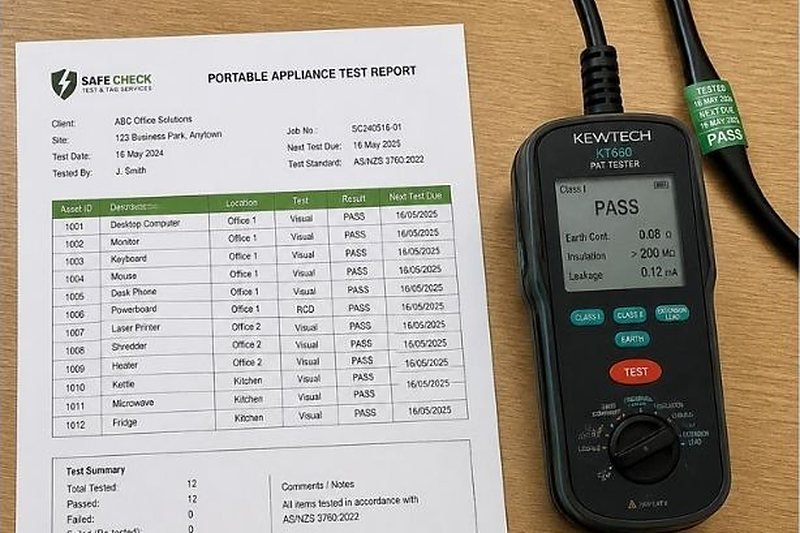 Certificates & registers
Certificate, itemised report and asset register, emailed the day the job is done.
Read more →
Not sure what needs testing?
Walk me round it on the phone and I'll tell you what counts and what it comes to.
Call 07816 957767 →
Certificates & registers
Certificate, itemised report and asset register, emailed the day the job is done.
Read more →
Not sure what needs testing?
Walk me round it on the phone and I'll tell you what counts and what it comes to.
Call 07816 957767 →
Across Yorkshire and beyond
PAT Testing Across Yorkshire
PAT Testing is a safety check on anything that plugs into a socket. The formal name is Portable Appliance Testing; you will also see it written as Appliance Testing, Electrical Equipment Testing, Electrical Safety Testing or In-Service Inspection and Testing. Different words, one job.
Each item gets a visual inspection first — that is where most faults are found — then a PAT electrical test on the meter for earth continuity, insulation and lead condition. Then a dated label goes on the item, pass or fail, and the result goes on your register.
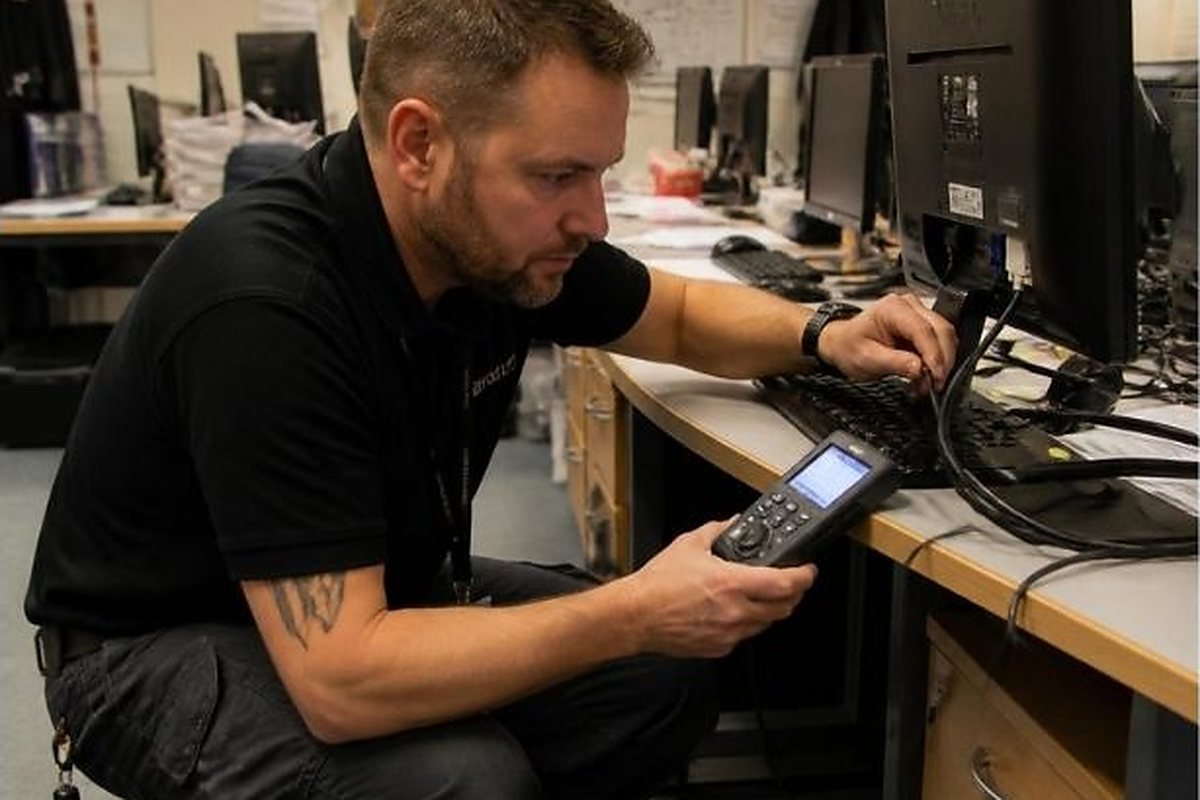
Do you need an electrician to do PAT testing?
No. What the law asks for is a competent person with the right training and the right meter — not a particular trade. City & Guilds 2377 is the qualification written for in-service testing, and it is the one I hold. Plenty of firms send an electrician; the test is the same, and so is the certificate.
How often should appliances be tested?
It depends on the item and where it lives. A desktop PC in a quiet office might go three or four years. A staffroom kettle, a hoover dragged round a building or a power tool on site takes far rougher treatment and wants doing yearly. Tell me what the kit is and where it sits and you get a sensible interval, not a blanket one.
What happens when an item fails
It gets a fail label, comes off the register as unsafe, and you are told why in plain words. If the fault is in the plug top or the fuse, it is put right on the spot and retested. If it is in the lead itself or inside the appliance, the item goes out of use until it is repaired or replaced.
For businesses
Commercial and Office PAT Testing
Commercial PAT Testing covers everything a business plugs in, and Business PAT Testing is the same service under the name most people search for. The office parks around Leeds, Wakefield and Normanton are a large part of my week, and the pattern is always the same: get in, work desk by desk, get out without anyone losing an afternoon.
For landlords and agents
Landlord, HMO and Rental Property PAT Testing
Landlord PAT Testing and Rental Property PAT Testing cover every appliance you supply with the property. HMO PAT Testing goes further, because a shared house has shared kit and a higher duty attached to it.
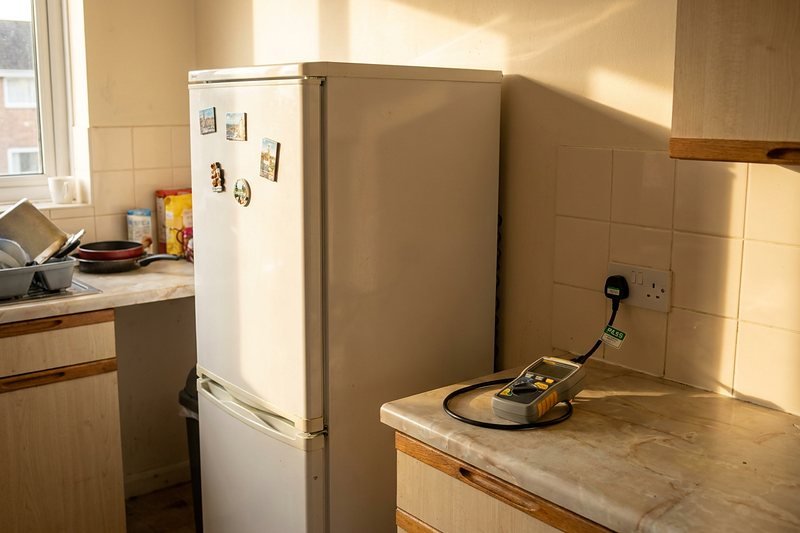
Is it a legal requirement for landlords?
Not by that name. What the law says is that any appliance you supply has to be safe, and a test record is how you show it was safe on a given date. Agents and insurers increasingly ask for that record before they will take the property on.
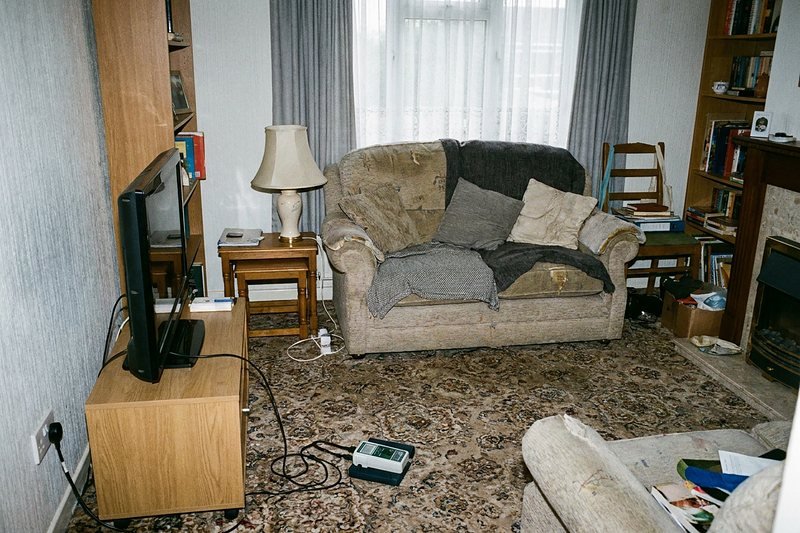
What counts in a furnished let
Anything you left there: white goods, the vacuum, lamps, the microwave, the TV lead, the extension behind the sofa. Anything the tenant brought is theirs. A typical three-bed furnished house is 15 to 25 items and takes well under an hour.
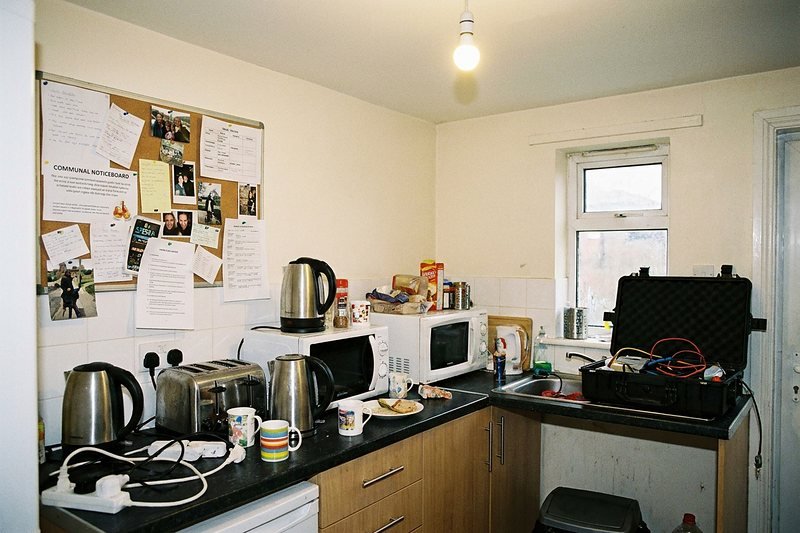
Terraced HMOs in Bradford and Huddersfield
The stone terraces converted to shared houses are a job of their own: six microwaves, four kettles, a shared laundry and a communal hoover, all in daily use by people who did not buy any of it. I test room by room and log which item sits where.
Managing a portfolio? Send me the address list and I will work through it in runs rather than one call-out at a time.
Testing at a time that suits the business
Six in the morning, ten at night, Sunday afternoon. The phone is on and the diary is open around the clock.
For short-let owners
Holiday Let and Airbnb PAT Testing
Holiday Let PAT Testing and Airbnb PAT Testing deal with a property that gets a new set of hands on everything every few days. A cottage kettle is used harder in a season than a home kettle is in five years, and nobody who breaks a lead on holiday tells the owner about it.
Fitting a visit round changeover day
Short lets have one window and it is narrow. I work to it. Turn out between the ten o'clock checkout and the four o'clock arrival, test the lot, label it and be gone before the next guests are on the drive. Where a property has a back-to-back booking, I will come at six the next morning instead.
What platforms and insurers expect
No booking platform issues a rule with a certificate number on it, but insurers ask, and a claim after a fire is a bad moment to find out what your policy wanted. A dated test record for every supplied appliance is the cheapest piece of evidence you will ever buy.
Cottages towards the Dales and the East Coast
A good share of this work sits at the ends of my patch: converted barns up towards the Dales, and the coastal lets from Bridlington round to Hornsea. Both are a fair drive, so I group them. If you own more than one, or your neighbours let theirs too, say so and the whole row gets done in a day.
For hospitality and retail
Shops, Pubs and Commercial Kitchens
Shop PAT Testing, Pub PAT Testing and Café PAT Testing all share one problem: the place has to keep trading. So the visit goes where the trading is not — before the doors open, after last orders, or on the quiet afternoon between the two.
Kitchen Appliance Testing is the heaviest part of it. Fryers, mixers, toasters, glass washers, coffee machines, hot plates and the fridges that never go off.
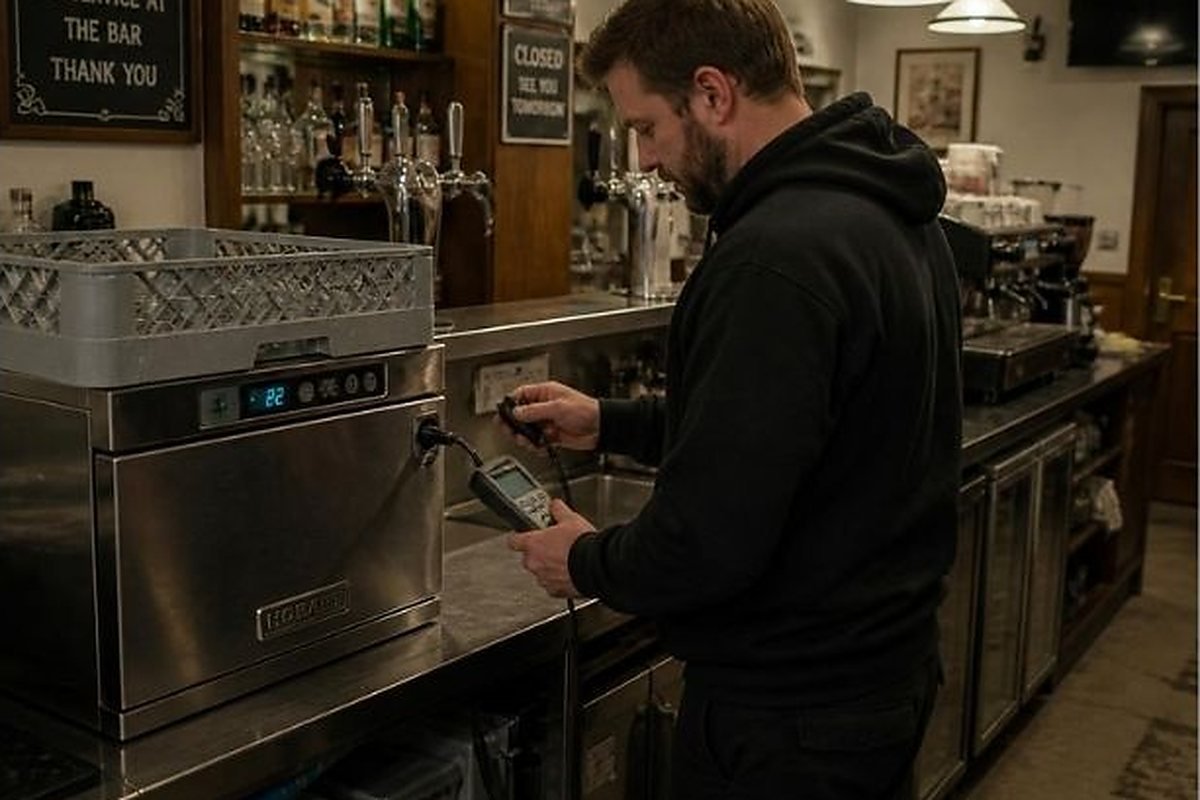
Testing a kitchen that cannot stop
Heavy kitchen kit needs to be off and cool before it can be tested properly, which is why a kitchen is a morning job or a late one. I start with the movable items, work back to the fixed-position machines, and put everything back where the chef left it. Nothing is left pulled out from the wall.
Before opening or after last orders
Round-the-clock availability matters more here than anywhere else on this page. A pub that shuts for an afternoon to get its appliances tested has paid for the visit twice over in lost trade. Pick the hour that costs you nothing and I will work it.
Microwave leakage testing, and why it is separate
Microwave Leakage Testing is not part of a standard appliance test. It is a separate meter-based leakage check on the door seal and casing, and it carries its own certificate. It is £3 a microwave on top of the test. Any kitchen with a microwave in daily service — pub, café, staffroom or care home — is worth adding it to. Say so when you book and it goes on the same visit.
For schools and care settings
Schools, Nurseries and Care Settings
School PAT Testing, Nursery PAT Testing, Care Home PAT Testing and Hospital PAT Testing have one thing in common that the rest of this page does not: the people around the equipment are children, patients or residents. Everything about the visit is arranged around that.
Included in the visit
Repairs and Replacements Done on the Spot
A good share of failures are not the appliance at all — they are the plug top or the fuse, and both get sorted while I am stood there, then retested and passed. Equipment Maintenance here means exactly that: appliance-level tidying up found during testing, done before I leave.
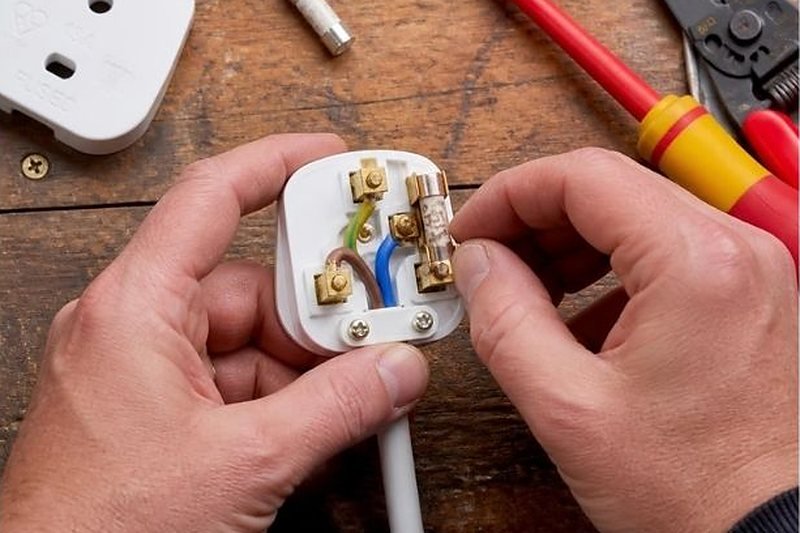
Plugs and fuses
Plug Replacement, Plug Rewiring and Fuse Replacement are the three most common fixes on any visit. A cracked plug top, a loose cord grip or the wrong-rated fuse all fail an item, and all three take minutes. Replaced on the spot, retested, and included in the price of the test.
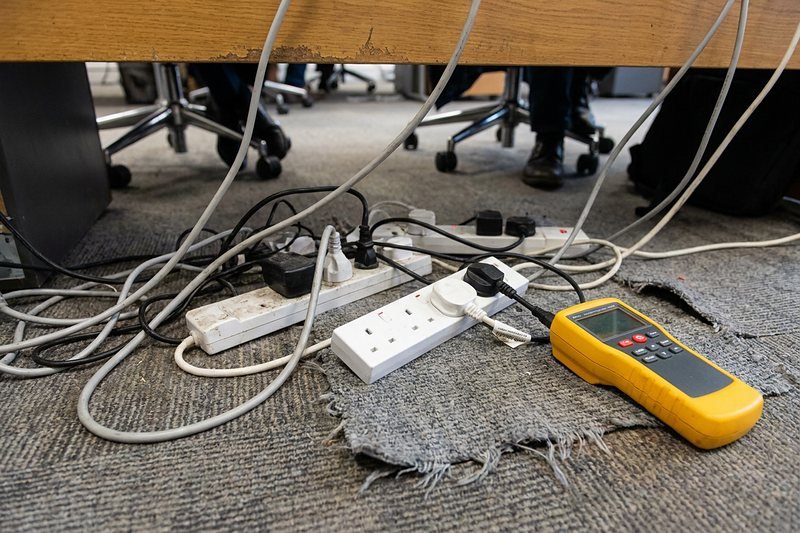
Extension leads and daisy chains
Extension Lead Testing finds more problems than any other single item. Four-ways plugged into four-ways, cheap unfused blocks, reels left coiled under a load. Each one is tested as an item in its own right and labelled, and the dangerous chains get pointed out to whoever runs the floor.
To be clear about the line I work to: I put plug tops and fuses right. I do not repair appliances, and I do not replace leads. Where the fault is in the lead or inside the machine, the item is failed, labelled and taken out of use.
The paperwork
Certificates, Reports and Asset Registers
The test is half the job. The other half is the record, because that is the part an insurer, an agent or an inspector asks to see. Every visit produces a PAT Testing Certificate — the same document is called an Appliance Testing Certificate by some agents — plus itemised PAT Testing Reports for the whole site.
What is on the certificate
Site, date, and the qualification and test equipment used. Then every item: what it is, where it was, its ID number, the readings, pass or fail, and the retest date. Failures are listed separately with the reason, so nothing has to be hunted for.
Your asset register, and why it earns its keep
An Asset Register is the list of everything tested, numbered and located. It is worth more than the certificate over time. Year two takes less of your day because the round is already mapped, disputes about what was on site are settled in seconds, and you can see which department keeps killing kettles.
Labels on the item, records in your inbox
Appliance Labelling puts a dated pass or fail label on every item as it is tested, with its ID number, so anyone can see the status without opening a file. The digital copies go to you by email. If you would rather have a printed set in a folder for the wall, say so and one comes with me.
What it costs
What PAT Testing Costs
Most firms make you ring up to find out. Here is the whole thing in the open, so you can work out your own number before you speak to anyone.
It starts at £80, and that covers the visit and the first 50 appliances. Beyond 50 it is priced per item, and the rate drops as the count goes up. Nothing is added afterwards that is not on this page.
What that comes to in practice
- Small officearound 40 items£80
- Pub or caféaround 120 items£136
- Care home or schoolaround 300 items£280
- Hotel or small factoryaround 600 items£510
- Multi-site or large facilityaround 1,200 items£910
Counts are a guide. Give me a rough number on the phone and you get the exact figure before I set off.
The price list in full
| What | Price |
|---|---|
| Attendance charge — includes testing the first 50 items | £80 per visit |
| Items 51 to 500 | £0.80 each |
| Items 501 to 1,000 | £0.70 each |
| Items 1,001 and above | £0.60 each |
| Microwave leakage testing | £3 per microwave |
| Out-of-hours attendance you have asked for — evenings, overnight or weekends | Standard rates +25% |
| Multi-site and large-volume contracts | Negotiable |
How the bands work
Each rate applies only to the items that fall inside its band. Going past 500 items does not make the first 500 cheaper — it makes items 501 onwards cheaper.
Evenings and weekends: there are two rates, not one
If you ask me to come in outside normal hours because it suits your business — after last orders, before the shop opens, overnight in a warehouse — that is standard rates plus 25%.
But if the out-of-hours slot is one I have offered you because it suits my diary, it is charged at standard rates. I work around the clock anyway, and there are plenty of evenings and weekends where an unsociable hour costs me nothing. Ask what I have free before you assume a night visit carries a premium — often it does not.
Multi-site and large volume
More than one site, or a count into the thousands, and the rate card stops being the right tool. Those are quoted on the volume, the number of sites and whether it is a one-off or a standing arrangement. Send me the list of addresses and rough item counts and you will get a figure back.
How it works
Four steps, no runaround
From the first call to the certificate landing, this is the whole of it.
-
01
Call and count
Tell me the site and roughly how many items. I quote on the phone, per appliance, and the figure does not move on the day.
-
02
Choose a time
Let me know your preference of date and we'll be in touch to find a date & time that works.
-
03
Tested and labelled
Inspected, tested, labelled, logged. Plug tops and fuses put right on the spot. Failures explained as I go.
-
04
Paid, then paperwork
Testing done, payment taken, certificate in your inbox the same day — with the report and the asset register.
Why RSTUK
One qualified engineer, on call at any hour
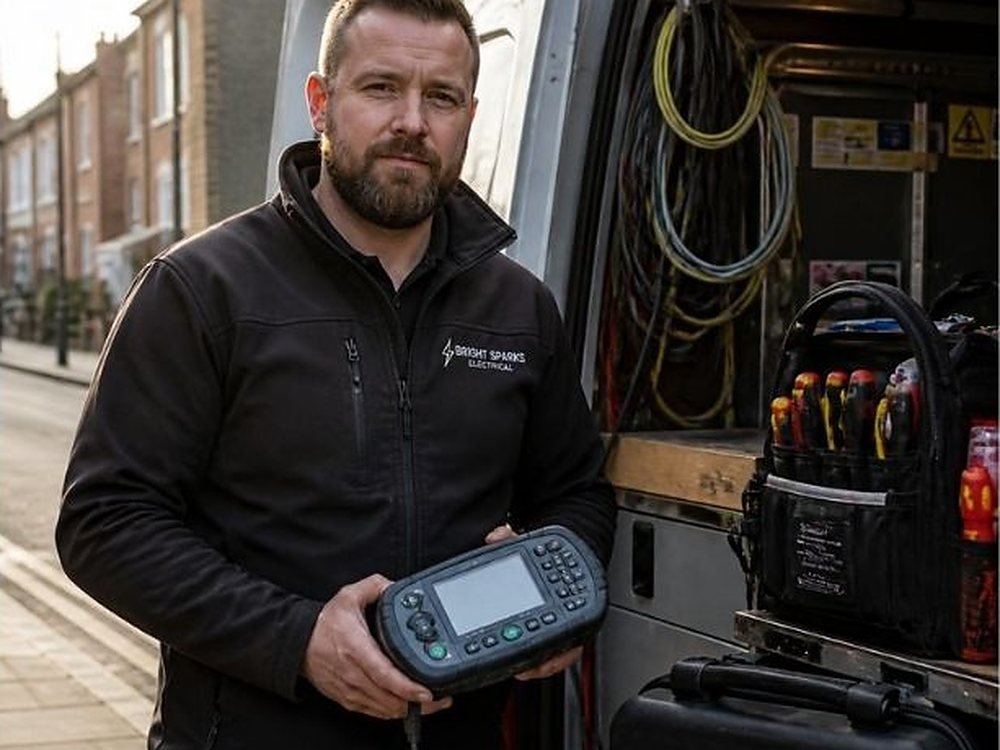
Most PAT testing companies in this part of the world are a booking line and a rota. You get whoever is free. With RSTUK you get me, every time, and the same phone number afterwards if a certificate needs re-sending or an agent has a question.
I do one thing. Not a sideline bolted onto another trade — portable appliance testing is the whole business, and City & Guilds 2377 is the qualification for it.
- 24 hours, seven days. This is the real difference between me and every PAT test company on my patch. Nobody local advertises it and plenty of sites need it — pubs, shops, kitchens and schools that cannot shut during trading hours. Nights, weekends and bank holidays are normal working time here. Out-of-hours attendance you ask for is standard rates plus 25% — but a slot I offer you because it suits my diary is charged at standard rates, so ask before you assume a night visit costs more.
- Priced per appliance. You know the number before I arrive, not after.
- Enhanced DBS checked and on the Update Service, so schools and care settings can check me the same morning.
- Calibrated Seaward equipment and the readings printed against every item.
- Same-day paperwork. Certificate, report and register by email once the job is done and paid.
- Trading since January 2024, with £5m public liability and £2m professional indemnity cover.
Areas covered
Yorkshire, Lincolnshire and Nottinghamshire
Based in Allerton Bywater near Castleford, with the M62 and the A1 both on the doorstep. If you are near the edge of this list, ring and ask — the answer is usually yes.
- West Yorkshire
- South Yorkshire
- North Yorkshire
- East Riding of Yorkshire
- Lincolnshire
- Nottinghamshire
- Castleford
- Pontefract
- Normanton
- Wakefield
- Leeds
- Bradford
- Huddersfield
- Dewsbury
- Barnsley
- Rotherham
- Sheffield
- Doncaster
- York
- Hull
RSTUK PAT Testing Services · 27 Highfield Grove, Allerton Bywater, Castleford WF10 2EL
Popular searches
What people ask me for most
- PAT testing near me
- PAT tester near me
- PAT testers near me
- PAT test near me
- Local PAT testing in Castleford and Pontefract
- PAT testing companies near me
- PAT testing services for Leeds offices
- Commercial PAT testing in Wakefield
- Portable appliance testing service for Bradford HMOs
- Electrical appliance testing for pubs and cafés
- Electrical PAT testing for schools and nurseries
- PAT testing company for holiday lets in the Dales
Get a figure before you commit
Tell me the site and roughly how many items, and you get a price per appliance on the call. Any hour, any day.
Common questions
The things people ask before booking
How much does PAT testing cost?
£80 covers the visit and the first 50 appliances. After that it is £0.80 an item up to 500, £0.70 for items 501 to 1,000, and £0.60 above that. So a 120-item pub is £136 and a 300-item school is £280. Microwave leakage testing is £3 a microwave on top. The full price list is on this page.
Is there a minimum charge?
Yes, £80. That is the attendance charge and it already includes testing the first 50 items, so a small office or a single rental property usually costs exactly that and nothing more. You only start paying per item from number 51.
Do you charge extra for evenings and weekends?
Only when you ask for them. Out-of-hours attendance you have requested is standard rates plus 25%. If the evening or weekend slot is one I have offered you because it suits my diary, it is charged at standard rates. Ask what I have free before you assume a night visit carries a premium.
Do I need a qualified electrician to do PAT testing?
No. The law asks for a competent person with the right training and the right meter, not a particular trade. I hold City and Guilds 2377, In-Service Inspection and Testing of Electrical Equipment, and I test with calibrated Seaward equipment. That is the qualification written for this work.
How long does a PAT testing visit take?
A small office of 40 to 60 items is usually a morning. A pub or café with a busy kitchen takes longer, because the heavy items have to be off and cool before they can be tested. A three-bed rental with white goods is often under an hour. I test around you, so nothing has to close.
Do landlords have to have PAT testing done?
There is no law that names PAT testing for a standard let. What the law does say is that any appliance you supply has to be safe, and a dated test record is how you show it was. For an HMO the duty is firmer, and most letting agents and insurers now ask for the record as a matter of course.
Can you test outside normal working hours?
Yes. I work 24 hours a day, seven days a week. Early mornings before a shop opens, after last orders in a pub, overnight in a warehouse, or through a school holiday. There is no need to lose a day of trade to get appliances tested. An out-of-hours visit you ask for is standard rates plus 25%; one I offer you because it suits my diary is standard rates.
What happens if an appliance fails?
It gets a fail label, comes off the register as unsafe, and you are told why. Where the fault is in the plug top or the fuse, it is put right there and then and retested. Where the fault is in the lead itself or inside the appliance, the item is taken out of use until it is repaired or replaced.
When do I get my certificate?
Testing done, payment taken, certificate in your inbox the same day. The certificate, the itemised report and your asset register all come together, as soon as the job is finished and paid for.
Which areas do you cover?
Yorkshire, Lincolnshire and Nottinghamshire. Castleford, Pontefract, Normanton, Wakefield, Leeds, Bradford, Huddersfield, Dewsbury, Barnsley, Rotherham, Sheffield, Doncaster, York and Hull are all regular. The M62 and the A1 make a wide patch practical, so ask even if you are at the edge of it.